Preface: Checking a Refund Only as Far as the Evidence Goes
Question for this chapter. What does this book do, and what does it not do? Who is it for? And what exactly does "only as far as the evidence goes" mean?
Short answer. This book helps you check deductions, credits, and two-country filing points item by item. It does not prepare your return or promise a refund. It is for households in the U.S. who want to review a past or upcoming return calmly, especially when they have income, assets, or family in another country. "Only as far as the evidence goes" means two things. You claim only what your documents support, and you draw a conclusion only when the information supports one.
0.0 Names and rules
Term box — Deduction. An amount that reduces the income that tax is calculated on (taxable income). A deduction applies only when its conditions are met.
Term box — Tax credit. An amount that reduces the tax itself, not the income. Like a deduction, it applies only when its conditions are met.
Term box — Settlement difference. On a return, the gap between the tax you owe for the year and the tax you have already paid. This is not the same as the money that reaches your bank account.
Term box — Evidence. The documents that show a condition is met: receipts, statements, contracts, and transfer records. Memory or a guess is not evidence.
Term box — Evidence level. How strongly the available information supports a statement or a result. A wide range or many assumptions usually means the information is still incomplete. It does not mean the result is wrong.
0.1 Where this book started
Talk about taxes often starts with "How much more can I get back?" That is understandable. After a year of working, raising children, paying rent, and helping parents in another country, it is natural to wonder whether some money was missed.
Over many years of reviewing returns for immigrant households in the U.S., Amy Choi, CPA, often saw a different picture. A deduction claimed without support was often a bigger problem than a deduction that was missed. Some filers also changed their documents after hearing "you can get money back." Later they had no records to explain the change.
So this book changes the question. It does not ask "How much do I want to get back?" It asks "What grounds can I point to for saying I qualify?" The starting point is to check refunds and deductions by the grounds for claiming them, not by the wish to receive them.
0.2 What this book does
The subtitle of this book is A guide to checking deductions, tax credits and two-country filings for immigrant households in the U.S. As the subtitle says, the book's job is checking.
In practice, the book does the following:
- It shows, item by item, deductions and tax credits you may have missed.
- For each item, it sets out the conditions that must be met and the documents that can show those conditions.
- Where a result depends on assumptions, it states those assumptions openly.
- It names the basis for each rule by form, instructions, or statute, along with the tax year.
- It points out where your U.S. return connects with income, assets, and taxes in another country.
The book does not fill out your return. It shows you what to check. After each chapter, the goal is that you can sort items roughly into three groups. One group is worth checking in your situation. One needs more documents. One is worth discussing with a tax professional.
0.3 What this book does not do
The book is just as clear about what it does not do. Knowing this split is half of knowing how to read the book.
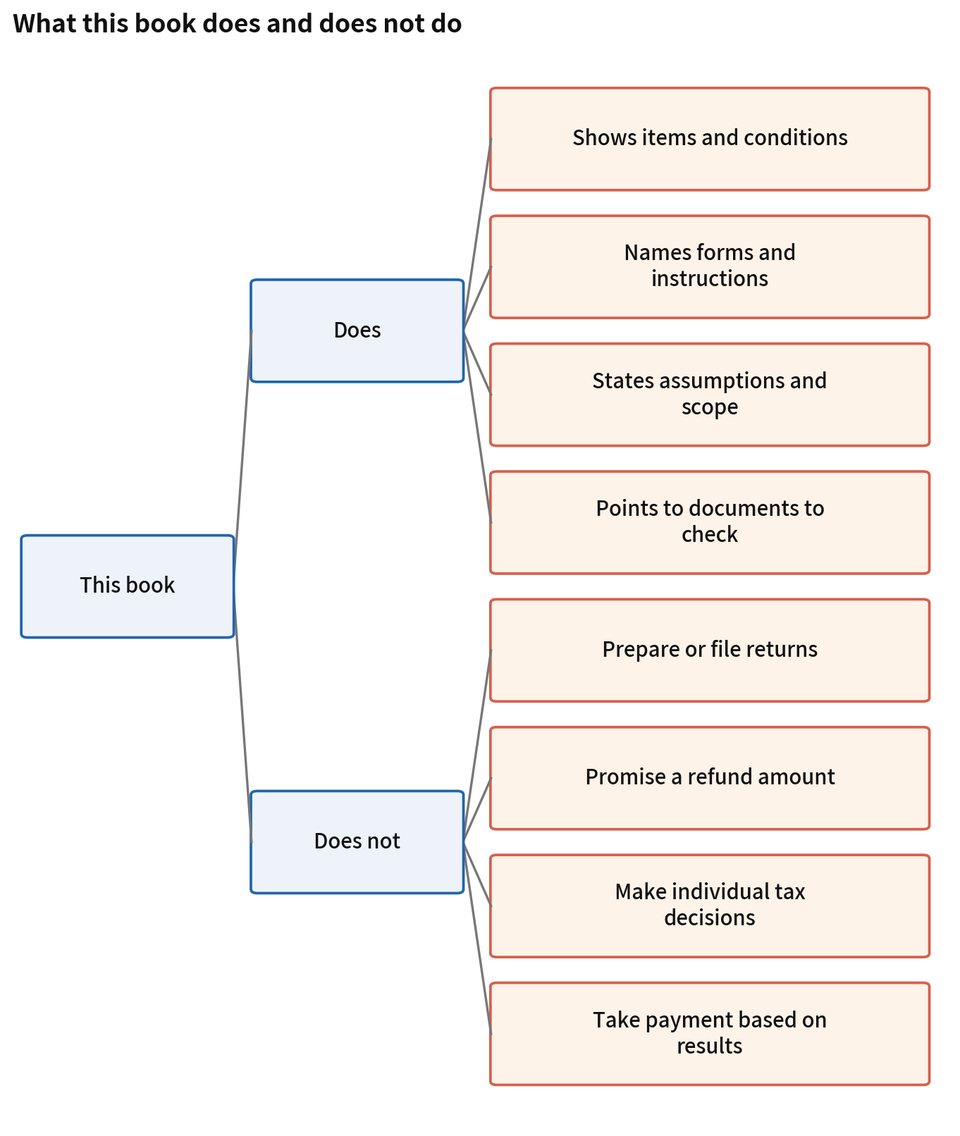
Figure 1. The split between checking and deciding is half of how to read this book.
| What this book does | What this book does not do |
|---|---|
| Shows the items and conditions to check | Does not prepare or file your return |
| Names the forms and instructions behind each rule | Does not promise a refund amount |
| States its assumptions and scope | Does not make individual tax decisions for you |
| Points to the documents worth checking | Does not take payment based on results |
This book is research and education material. It does not take on filing work, it does not guarantee any refund, and it charges no contingency fee. It does not recommend any particular tax preparer or service. The IRS and the home country's tax agency are mentioned only as sources of rules. The book was not made with any government agency.
Households differ in their types of income, family makeup, length of residence, and ties to another country. The same item may apply to one household and not to another. That is why the book does not say "You must do this." It says "Under these conditions, this item is worth checking." An actual decision should rest on your own documents and a review by a tax professional.
0.4 What "only as far as the evidence goes" means
The phrase in the title has two meanings.
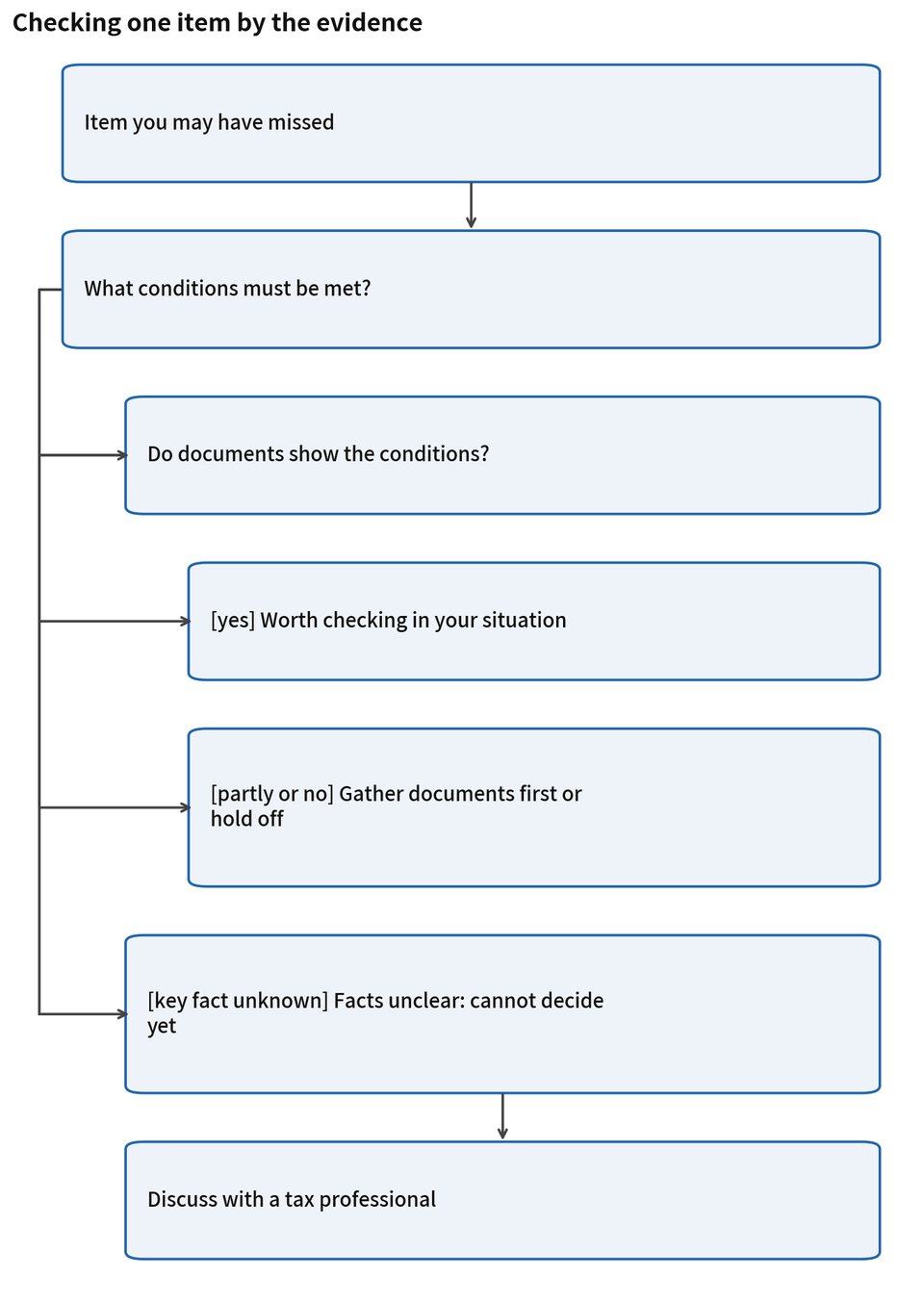
Figure 2. For each item, check the conditions first, then the documents. Sort the item by what the evidence supports.
First, make a claim only as far as your documents support it. A deduction or tax credit exists only when its conditions are met. You can raise an item only when you have receipts, statements, contracts, or transfer records that show the conditions are met. Memory or a guess is not enough.
Second, reach a conclusion only as far as your information supports it. When information is missing, the book writes "cannot be decided yet." It does not force an answer. This is why each chapter ends with separate lists of what is confirmed, what cannot be decided yet, and what information you need.
This approach may look cautious. In practice it protects you. You can claim well-supported items with confidence. For weakly supported items, you can gather documents first or hold off.
0.5 Two example situations
To get a feel for how to read the book, here are two situations without numbers. They are not real households. They are scenes meant to help understanding.
Example. A two-earner household and the "maybe" deductions. A married couple living in the U.S., both working, looks back at last year's return. They paid for child care. They also sent money regularly to their parents in another country. They wonder whether any of this brings a tax benefit.
How to read it. First, look at the conditions under which child care costs can qualify for a tax credit, and at the documents that show those conditions. For the money sent to the parents, look at which facts must be checked under the dependent rules. Then separate the items with grounds to meet the conditions from the items where information is still missing. The conclusion is neither "everything qualifies" nor "nothing qualifies." It sounds more like this: "This item is worth checking if the documents exist. For that item, this fact must be known first."
- Assumption. The couple files as U.S. tax residents. Some records of the child care costs and the transfers remain.
- How to read it. For each item, write down three things separately: the conditions, the supporting documents, and the missing information.
Example. A household with assets still in another country. A household moved to the U.S. a few years ago. It still has bank deposits and a rented-out home in the country it came from. The household wants to know how to handle these on the U.S. return, and how tax already paid in the other country connects to it.
How to read it. The book treats the other country's income, assets, and taxes as part of what this household must review together with its U.S. return. Check these in order: which income arose in which country, whether tax has already been paid on that income, and which documents from the other country show it. Results where two countries' rules meet can change a great deal depending on the assumptions. So the book focuses on stating the scope and the assumptions.
- Assumption. The household lives in the U.S. and can obtain its income and tax payment records from the other country.
- How to read it. Write the U.S. items and the other country's items side by side. Mark which documents link the two.
0.6 Who should read this book
The main readers are immigrant households living in the U.S. The book is especially useful for:
- Filers who want to calmly review whether something was missed on a past return
- Households with income, assets, or family in another country who want to understand how the two countries' filings connect
- Filers who want to organize questions and documents before meeting a tax professional
- Filers who want to check the grounds behind a software result before relying on it
Readers living outside the U.S. may find some chapters useful if they have U.S. income or assets. The explanations, however, are built around households living in the U.S. For readers living abroad, the book offers only a secondary path.
On the other hand, the book may not suit anyone looking for a tool that completes a return quickly, or anyone expecting a set refund amount.
0.7 How to read this book
Most chapters follow a similar pattern. Each opens with the chapter's question and a short answer, followed by names and rules and then the main sections. Depending on the chapter, there may also be frequently asked questions, the limits of the chapter, and lists of what is confirmed and what cannot be decided yet. Because the pattern repeats, you can read only the chapters you need. Reading paths for different readers are set out in "How to Read This Book."
Terms appear first in plain words, with form or statute names in parentheses. Amounts, rates, and limits are 2025 tax-year values. Whether each transcribed value has been checked against the official document is shown by its status label. Before using a value, look first at the conditions under which it applies.
If you are new, start with Chapter 1, "Deductions, Credits and Refunds Are Three Different Things." It covers the basic distinction used throughout the book. Three things are different from each other: the taxable income reduced by a deduction, the settlement difference on the return, and the money you actually get back. If this distinction blurs, other chapters are easy to misread.
When a chapter gives results as a range or attaches several assumptions, Chapter 20, "How to Read Scope, Assumptions and Evidence Levels," can help. A wide range is a sign that information is still missing. It does not mean the result is wrong.
FAQ
Question. Will this book tell me how much I will get back?
Answer. No. The book does not promise a refund amount. It shows which items are worth checking, what conditions apply, and what documents can show those conditions.
Question. Can I use this book instead of a tax professional?
Answer. The book does not make individual tax decisions. It helps you organize your questions and documents. Where an item depends on facts the book cannot judge, the chapter marks it as one to discuss with a tax professional.
Question. Does the book or its author benefit if I claim more?
Answer. No. The book is research and education material. It takes no payment based on results, charges no contingency fee, and recommends no particular tax preparer or service.
Limits of this chapter
- This preface describes the book's approach. It does not cover any specific deduction, credit, or two-country rule.
- The two example situations have no numbers and are not real households.
- Reading paths for different readers are covered in "How to Read This Book," not here.
What is confirmed / What cannot be decided yet / Information you need
What is confirmed
- The book checks items. It does not prepare or file returns.
- The book does not promise refunds, take payment based on results, or recommend any service.
- Values in the book are 2025 tax-year values, each with a status label.
What cannot be decided yet
- Whether any item applies to your household. That depends on your conditions and documents.
Information you need
- Your income types, family makeup, length of residence, and ties to another country.
- Receipts, statements, contracts, and transfer records that support each item you want to check.
0.8 Closing
Reviewing taxes is less like a hunt for hidden money and more like balancing a ledger. Do not miss items that have grounds. Do not rush items that lack them. When information is missing, write down that it is missing.
This book invites you to do that work. It will not reach conclusions for you. Instead, it helps you check things yourself and bring precise questions to a tax professional when needed. Amy believes the habit of checking only as far as the evidence goes is, in the end, the tax tool that lasts longest.