1 Deductions, Credits and Refunds Are Three Different Things
Question for this chapter. If a household finds more deductions, does its refund grow by the same amount? What is the difference between a tax credit and a deduction? In the same year, one household gets a refund and another owes more tax. Where does that difference come from?
Short answer. A deduction reduces the income that tax is calculated on. A credit is subtracted directly from the tax that has been calculated. A refund does not measure the size of a deduction or credit. It is the result of comparing the tax paid in advance with the final tax. So a larger deduction does not mean a refund grows by the same amount. In every case, the result depends on the household: its income, the tax it paid in advance, the number of children, and other facts.
1.0 Names and rules
The preface and "How to read this book" explain what this book does and does not do. This chapter starts by separating three words that look alike. It uses U.S. federal income tax as the example. For credits, the main example is the child tax credit.
Term box — Deduction. An amount subtracted from income before tax is calculated. A deduction does not reduce the tax itself. It reduces the income that tax is calculated on, called taxable income. The U.S. standard deduction and itemized deductions are deductions.
Term box — Tax credit. An amount subtracted directly from the tax, after tax rates have been applied to income. For the same dollar amount, a credit reaches the tax more directly than a deduction does.
Term box — Refundable part (form name: additional child tax credit). The part of a credit that can be paid back, within a limit, when the credit is larger than the tax owed. For the child tax credit, the forms calculate this refundable part separately, under the name "additional child tax credit."
Term box — Withholding. Tax that an employer takes out of each paycheck and pays to the IRS in advance. Most of the tax a household pays in advance during the year comes from withholding.
Term box — Refund. The difference paid back when the tax paid in advance is more than the final tax. If the tax paid in advance falls short, the filer pays the difference.
The three expressions below mean different things. This chapter keeps them separate.
| Expression | What it means | What decides it |
|---|---|---|
| Taxable income or tax reduced by a deduction or credit | How much a deduction reduces taxable income, or how much a credit reduces the tax | The deduction or credit rules and the household's income |
| Settlement difference on the return | The difference between the final tax and the tax paid in advance (an amount owed or an amount to be paid back) | The last settlement step on the return |
| Money that actually reaches the bank account | The money that actually arrives by deposit or check | The settlement difference, plus any other adjustments and processing results |
The values in this chapter are 2025 tax-year values. The status label for each value shows whether that transcribed value has been checked against the official document. See the table at the end of this chapter.
1.1 A deduction reduces taxable income
Explanation. A deduction works early in the tax calculation. Subtract deductions from total income, and the result is taxable income. Tax rates are then applied to taxable income to calculate the tax. For this reason, the tax saved by a deduction is not the deduction amount itself. It is the deduction amount multiplied by the rate that applies to that household. For a household with a low tax rate, the same deduction saves less tax.
The U.S. standard deduction and itemized deductions are the main deductions. Chapter 4 covers how to choose between them and how much each one is. This chapter looks only at where in the calculation a deduction does its work.
Example. Suppose two households each find the same additional deduction. One household is in a high tax bracket. The other is in a low tax bracket. Both households' taxable income goes down by the same amount. However, the household with the higher rate saves more tax. For a household that already has almost no taxable income, finding another deduction may leave almost no tax to reduce.
Assumption. The example assumes that the two households are alike in every other way. This chapter does not cover tax brackets or their values.
How to read it. When someone says they "got a bigger deduction," first ask: is it a deduction or a credit? If it is a deduction, next ask: what tax rate applies to this household? Do not read the deduction amount as the tax saved or as extra refund.
1.2 A credit reduces the tax directly
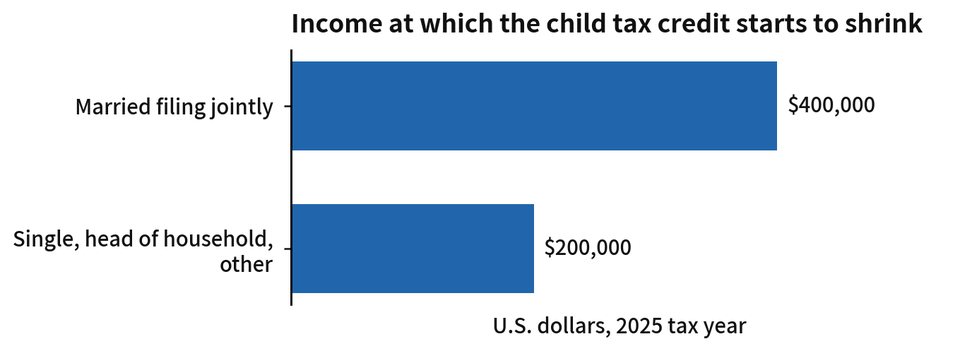
Figure 1-1. The child tax credit, up to $2,200 per child, starts to shrink when income is above these thresholds. The reduction is 5% of the income above the threshold.
Explanation. A credit works late in the tax calculation. The tax is calculated first by applying tax rates. The credit is then subtracted from that tax. Because the credit does not pass through a tax rate, the tax goes down by the full credit amount, as long as the calculated tax is large enough.
The child tax credit is a good example. For the 2025 tax year, the most it can subtract directly from the tax is $2,200 per child. That amount is a maximum. When income goes above a set threshold, the credit starts to shrink.
| Item | Married filing jointly | Single, head of household and other statuses |
|---|---|---|
| Maximum credit per child | $2,200 | $2,200 |
| Income at which the credit starts to shrink | $400,000 | $200,000 |
| Reduction rate applied to income above the threshold | 5% | 5% |
The credit starts to shrink at a higher income for married couples filing jointly than for single filers, heads of household and other statuses. The reduction is 5% of the income above the threshold. The relevant instructions say exactly which "income" this means and the unit used to calculate the reduction. Check both there. Chapter 5 covers who qualifies, such as the child's age and the support rules.
Example — Household A. A two-earner married couple has two children and files jointly. Their income is below $400,000. The tax calculated by applying tax rates is larger than the total credit for the two children. In this case, the child tax credit is calculated without any reduction, and the tax goes down by that amount. This is about "tax reduced by a credit." It does not tell us yet whether this household will get a refund, or how much. That is decided at settlement, in section 1.4.
Example — Household B. A married couple with the same family makeup has income above $400,000. Their child tax credit shrinks by 5% of the income above the threshold. How much it shrinks depends on how far income goes above the threshold. If income is far above the threshold, the credit can shrink a lot. A filer with the same income who files as single, head of household or another status starts losing the credit at a lower income, $200,000.
Assumption. Both examples assume that the children meet the requirements. This chapter does not cover the exact definition of income or the unit used to calculate the reduction.
How to read it. For any credit, check three things. First, what is the maximum? Second, is the household's income above the reduction threshold? Third, is the calculated tax larger than the credit? The third question is the subject of the next section.
1.3 A credit larger than the tax: the refundable part
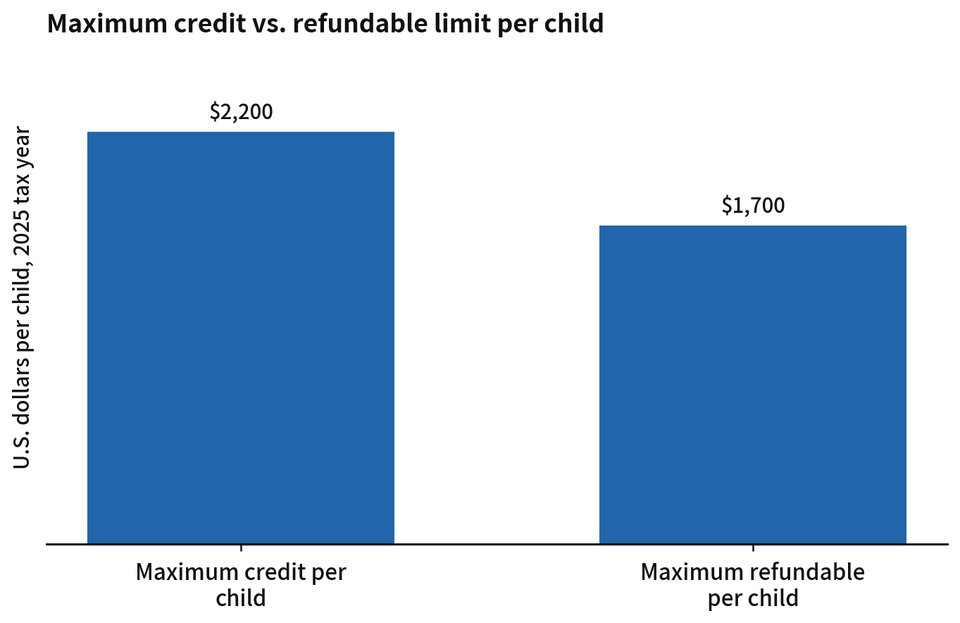
Figure 1-2. The maximum refundable amount of $1,700 per child is smaller than the maximum credit of $2,200 per child. The refundable calculation starts with earned income above $2,500, at a rate of 15%.
Explanation. A credit reduces the calculated tax. But what happens to the leftover credit when the tax is smaller than the credit? The answer is different for each credit. For the child tax credit, part of the leftover amount is calculated separately as the "additional child tax credit." This part can lead to money paid back, even when it is more than the tax owed.
Three rules apply to the refundable part.
| Rule | Value | Meaning |
|---|---|---|
| Maximum refundable amount per child | $1,700 | The per-child limit on how much of the leftover credit can move to the refundable side |
| Earned income at which the calculation starts | $2,500 | The calculation starts with earned income above this amount |
| Rate applied to earned income above that amount | 15% | This rate applied to earned income above the starting amount sets the basis for the refundable part |
The maximum refundable amount of $1,700 per child is smaller than the maximum credit of $2,200 per child. So for a household with almost no tax, the full maximum child tax credit does not move to the refundable side. The per-child limit and the earned-income rule are both used to set the size of the refundable part. The relevant forms and instructions show the order in which the two rules are applied. Check it there.
Example — Household C. A single parent has one child and files as head of household. Earned income is above $2,500. But after other deductions, the calculated tax is smaller than the child tax credit. In this case, the credit first reduces the tax. Part of the leftover credit may be calculated as the refundable part. Its size is set by looking at both the $1,700 per-child limit and the basis of 15% of earned income above the starting amount. At this stage, these are still inputs to the settlement difference on the return. Keep them separate from the money that actually reaches the bank account.
Example — Household D. The same household's earned income that year is not above $2,500. The refundable part is calculated from earned income above that amount, so there is no excess to start this calculation from. Even if the child tax credit is calculated, this household is unlikely to have any part move to the refundable side. This chapter does not cover whether another calculation method applies in some cases.
Assumption. Both examples assume that the child meets the requirements and that income is below the reduction threshold. The relevant instructions say what counts as "earned income." Check it there.
How to read it. Do not read the name of a credit as "the household gets that much back." Check separately whether the leftover credit moves to the refundable side and, if so, what limits and rules apply. The less tax a household has, the more this distinction matters.
1.4 A refund is the result of settling up
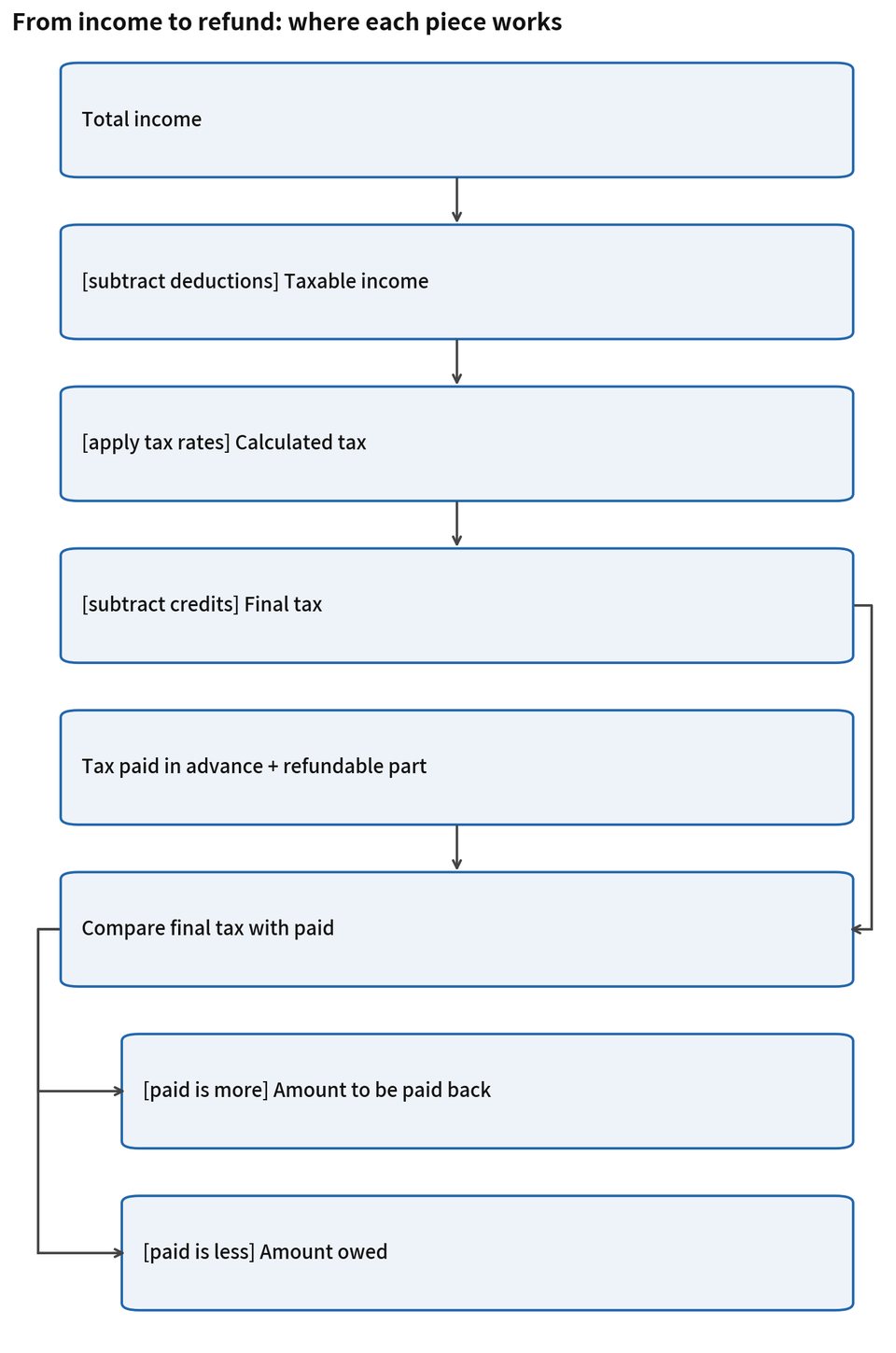
Figure 1-3. A deduction reduces taxable income early in the calculation. A credit reduces the calculated tax later. A refund or amount owed comes last, from comparing the final tax with the tax paid in advance.
Explanation. "Refund" is not the name of a deduction or credit. It is the result of comparing two numbers at the last step of the return. One number is the final tax, after all deductions and credits. The other is the tax paid in advance during the year, through withholding and other payments. In this settlement, the refundable credit from section 1.3 is added on the same side as the tax paid in advance.
| Settlement result | Meaning |
|---|---|
| Tax paid in advance (including refundable credits) is more than the final tax | The difference is an amount to be paid back |
| Tax paid in advance (including refundable credits) is less than the final tax | The difference is an amount owed |
So two households with the same deductions and credits can end up with different refunds. A household with a lot of withholding is more likely to get a refund. A household with little withholding may owe more tax, even with the same deductions and credits. A "big refund" does not mean "paid little tax." It may mean the household paid a lot in advance.
Example — Household A, again. Return to the two-earner couple from section 1.2. If the total withheld from their paychecks during the year is more than the final tax, they have an amount to be paid back. If the total withheld is less than the final tax, they have an amount owed. In both cases, the child tax credit reduced their tax by the same amount. Withholding is what changed the settlement result.
Assumption. The example assumes that the household paid no tax in advance other than withholding. This chapter does not cover adjustments that can happen between the settlement difference and the money that actually reaches the bank account.
How to read it. When a refund is smaller or larger than expected, look at it in three steps. First, how much did deductions and credits reduce taxable income or tax? Second, how much tax was paid in advance? Third, does the settlement difference match the amount actually received? Chapter 8 covers how to read withholding documents.
FAQ
Question. If I find more deductions, will my refund grow by the same amount? Answer. That cannot be said. A deduction reduces the tax by passing through a tax rate. A credit reduces the tax only while there is calculated tax left. A refund is the result of comparing that reduced tax with the tax paid in advance.
Question. Is a credit always better than a deduction? Answer. For the same dollar amount, a credit reaches the tax more directly. But the two are not alternatives the filer picks between. Each has its own requirements and amounts. And for a household with almost no tax, a credit that is not refundable may have only a limited effect.
Question. Our income was about the same as last year, but this year we owed more. Why? Answer. Withholding may have changed. Or a credit that depends on income or eligibility, such as the child tax credit, may have changed. Chapter 8 covers checkpoints for withholding, and Chapter 5 covers checkpoints for child-related credits.
What this comparison shows
Three different things happen under the single word "deduction." A deduction reduces taxable income. A credit reduces the tax, and part of it may move to the refundable side. A refund is decided only after all of this is compared with the tax paid in advance. When checking for a missed refund, start by asking: "At which step was something left out, and what was it?" If a deduction or credit was missed, how much it affects the settlement result depends on the step where it works.
Limits of this chapter
- This chapter does not cover values such as tax brackets or the standard deduction amount. The tax saved by a deduction depends on these values.
- This chapter does not cover who qualifies for the child tax credit (such as the child's age and the support relationship). Chapter 5 covers these.
- The relevant instructions give the exact definition of income used for the credit reduction and the unit used to calculate it. Check both there.
- The relevant forms and instructions show the order in which the per-child limit and the earned-income rule are applied to the refundable part, and what counts as earned income. Check both there.
- This chapter does not cover adjustments between the settlement difference and the money that actually reaches the bank account.
- This chapter does not cover deductions and credits in your home country. The home-country chapters (Chapters 9-12, six countries) cover them. The U.S. and your home country may calculate items with the same name in different ways.
- The example households show only which amounts are larger or smaller. They do not calculate actual amounts.
What is confirmed / What cannot be decided yet / Information you need
What is confirmed
- A deduction reduces taxable income. A credit reduces the calculated tax. A refund is the result of settling the final tax against the tax paid in advance.
- For the 2025 tax year, the maximum child tax credit is $2,200 per child. It starts to shrink, at a rate of 5%, when income is above $400,000 for married filing jointly or $200,000 for single, head of household and other statuses.
- The part of the child tax credit that can move to the refundable side is limited to $1,700 per child. This limit is smaller than the maximum credit per child.
- The calculation of the refundable part starts with earned income above $2,500. The basis is 15% of the earned income above that amount.
What cannot be decided yet
- Which household gets a refund and which owes more cannot be decided until the amount withheld is known.
- For a household with little tax, how much of the child tax credit moves to the refundable side cannot be decided until earned income and calculated tax are known.
- How much tax one more deduction saves cannot be decided until the household's tax rate is known.
Information you need
- Filing status (married filing jointly, single, head of household, etc.) and income level, to compare with the credit reduction threshold
- Earned income for the year, to compare with the starting amount for the refundable part
- Number of children who meet the requirements (see Chapter 5)
- Tax paid in advance during the year, through withholding and other payments (see Chapter 8)
- Type of deduction used (standard deduction or itemized deductions; see Chapter 4)
- The child tax credit section of the IRS instructions for the 2025 tax-year federal income tax return
Key values and sources in this chapter
| Value | What it is | Status | Source |
|---|---|---|---|
| $2,200 | Child tax credit per child | Extracted value, review pending | IRS Schedule 8812 instructions (i1040s8) |
| $400,000 | Income at which the credit starts to shrink (married filing jointly) | Extracted value, review pending | IRS Schedule 8812 (f1040s8) |
| $200,000 | Income at which the credit starts to shrink (single and other statuses) | Extracted value, review pending | IRS Schedule 8812 (f1040s8) |
| 5% | Credit reduction rate on income above the threshold | Extracted value, review pending | IRS Schedule 8812 (f1040s8) |
| $1,700 | Maximum refundable amount per child | Extracted value, review pending | IRS Schedule 8812 instructions (i1040s8) |
| $2,500 | Earned income at which the refundable calculation starts | Extracted value, review pending | IRS Schedule 8812 (f1040s8) |
| 15% | Rate used in the refundable calculation | Extracted value, review pending | IRS Schedule 8812 (f1040s8) |